Vegan Quick Start Guide
Updated: Dec 28, 2025
Are you interested in joining Veganuary but feel you can't because there's something you can't give up? Perhaps you're considering the 30-day vegan challenge. If so, this post is for you.
Having been vegan for the past four years, I'm familiar with all the alternatives. You can maintain a vegan lifestyle and still enjoy your favorite foods. It's all about knowing how and when to make substitutions.
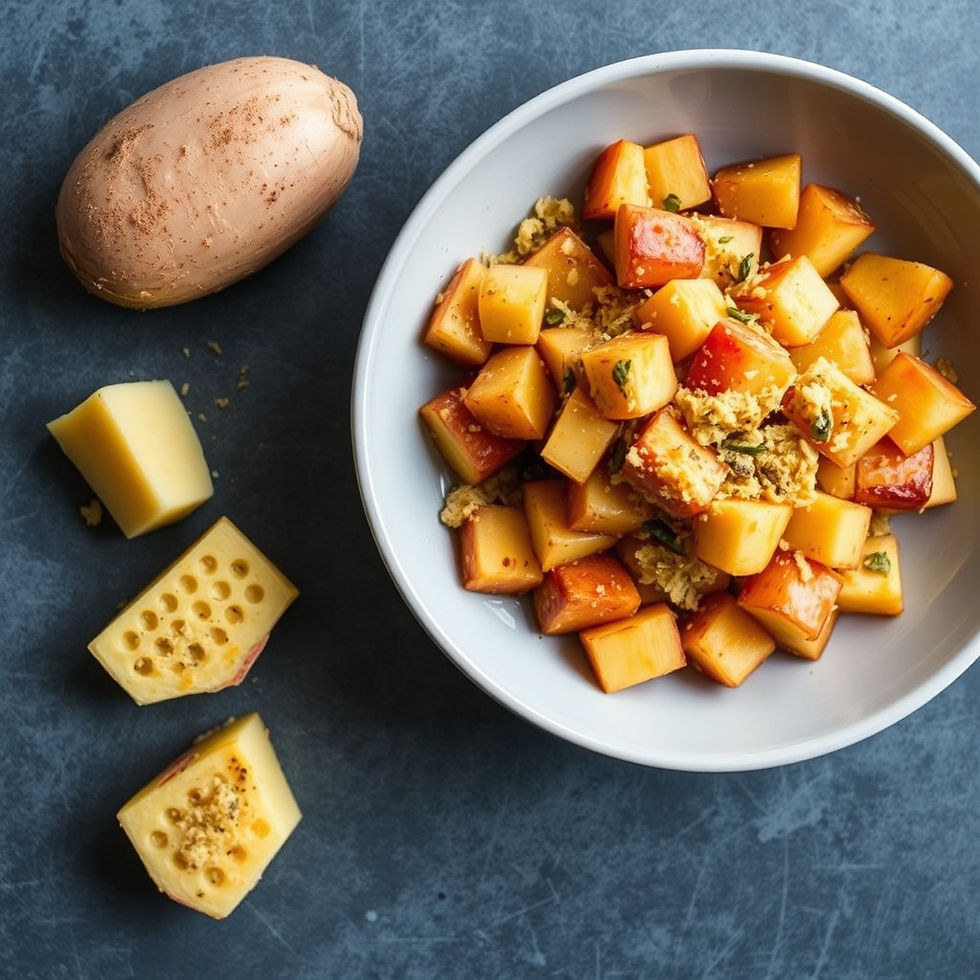
Cheese
The most common complaint I hear from people who want to try the 30 day challenge is, "I'd go vegan but would miss cheese too much."
What if I said you can still have it while being vegan. Here are some common substitutions:
Processed store bought vegan cheeses
Nutritional yeast (nooch)
Yellow potatoes
Sweet potatoes/yams
Soaked cashews for a creamy sauce
Its that simple and easy. For more information on which is best, please see my vegan cheese guide. If you are wanting a guide to store-bought cheeses, see my guide on store-bought vegan cheeses.
Eggs
Eggs can be a staple in most homes and many people say they can't bake or live without them. There are options available.
If you are looking to substitute eggs for baking/cooking, the following can be used instead:
Seed "eggs" (1 tbsp of ground seed of choice to 3 tbsp water, let sit for 10 minutes)
Plant milks
Aquafaba
Bananas
Applesauce
Mashed or pureed butternut squash, pumpkin, sweet potato, or yam
Psyllium husk
Nut butters
Seed butters
Vegan yogurt
Silken tofu
For more information on replacing eggs in baking, see my egg replacer in baking guide.
If you are looking to substitute eggs for eating, the following can be used instead by adding the black sea salt for egg flavor:
Tofu eggs
Mung beans
Chickpea egg
Processed vegan egg products (Yo Egg, Hodo, Just Egg)
For sauces you can make a roux or use plant milks to replace eggs such as in white sauces for pasta.
Milk
Milk can be made from plant sources. They can be used for many different things. Here are some that can be made or purchased:
Nut milks
Soy milk
Coconut milk
Oat milk
Vegan sweetened condensed milk (coconut)
Vegan condensed milk (coconut)
These milk alternatives can be incorporated into various dishes and serve as substitutes. I suggest using them in the same way you would use regular milk in a recipe. For certain recipes that require higher fat or protein content, I recommend opting for soy or coconut milk to achieve a similar flavor and nutritional profile, particularly in cooking or baking.
For more information, check out my plant milk guide.
Butter
Butter can be substituted just like anything else. The following can be used instead of butter:
Homemade vegan butter
Processed vegan butter substitutes
Olive oil
Coconut oil
Avacado oil
It depends on what you are making for which option is going to be best. For more information on plant butters, check out my plant based butters guide.

Proteins
The next concern I often hear is, "I would never get enough protein."
If that were the case, no vegan would be alive or healthy. Yet, most vegans remain both alive and healthy on their diet. It's crucial to understand where to source your protein.
Here are a few options for protein:
Tofu
Tempeh
Soy curls
Soy protein crumbles
Beans
Wheat
Barley
Oats
Vital wheat gluten
Rice
Nuts/nut butters
Lentils
Broccoli
Potatoes
Other vegetables
Nutritional yeast (nooch)
Seeds
Bread
Mushrooms
Jackfruit
Processed vegan meats
Processed vegan protein powder
Each protein source has a different value. Some may be higher than others. Its important to know what is going to be best so you can make your macros.
For more information on proteins, check out my protein guide.
Meat
Sometimes, you just have a desire for meat. Even after being vegan for 4 years, I still occasionally experience meat cravings. What helps alleviate these cravings is creating a protein dish that mimics the flavor I'm yearning for.
Meat usually absorbs the taste of the seasonings used. With that in mind, I can take any of the proteins mentioned above (such as processed vegan meats, tofu, tempeh, broccoli, cauliflower, cabbage, soy curls, beans, vital wheat gluten, or mushrooms) and prepare it in a similar manner with comparable seasonings to satisfy that craving.
This approach works because it fulfills my craving by providing the nutrients and macros my body requires, often being iron and/or protein.
Tracking nutrients
Adopting a vegan lifestyle requires monitoring your nutrients and macronutrients to maintain health and avoid potential health problems. I believe that even those who eat a varied diet should do the same for similar reasons.
As with any dietary change, consulting a doctor or certified nutritionist is advisable to ensure safe practices.
B12 supplementation
Many vegans emphasize the importance of taking a B12 supplement. Whether this is necessary depends on the country you reside in and the products you consume.
In Canada, for instance, many vegan products such as butters, meats, cheeses, nutritional yeast, and some tofu or tempeh are fortified with B12. If you consume these regularly, you might only need a low-dose B12 supplement or none at all.
If you don't consume these products, a B12 supplement will be required.
Vitamin D
Initially, many individuals might require a vitamin D supplement, but over time, they may need to decrease the dosage. This is because the body's ability to absorb this nutrient from food can improve. If you're taking supplements for this purpose, it's advisable to consult with your doctor to keep track of your progress.
Iron
For numerous individuals with anemia, adopting a vegan diet frequently resolves the problem. If you're taking supplements or receiving infusions, it's advisable to consult your doctor for monitoring.
Portions
A common mistake I often notice among new vegans is not consuming enough food. To sustain your energy levels, you'll need to eat more than before. It took me a considerable amount of time to understand this. Aim to consume 1800-2200 calories daily. Monitoring your nutrients and macros will help make calorie tracking simpler.
To honey or not to honey
As with any diet, there are various ways people follow them. The vegan community is split (and it's quite controversial) on the topic of whether consuming honey is acceptable. Some support it, while others do not.
Your approach to a vegan diet is your personal choice. If you wish to include honey for its health benefits, it is acceptable to do so as a vegan if that's your decision.
Reasons to go vegan
For many individuals, there is nearly always a reason to adopt a vegan lifestyle. Here are a few reasons that motivated me to become and remain vegan over the years:
Stop the exploitation of animals for food
Benefit the environment (reduced carbon and water usage/emissions)
Increase available land for living instead of agriculture
Foster a sustainable world
Enhance your health (can lead to a happier, improved quality of life)
Boost energy levels
I also suggest watching these documentaries on Netflix:
Game Changers
You Are What You Eat, Twin Experiment
What the Health
Hack Your Health: The Secrets of Your Gut
I hope you can join me on this journey.


Comments